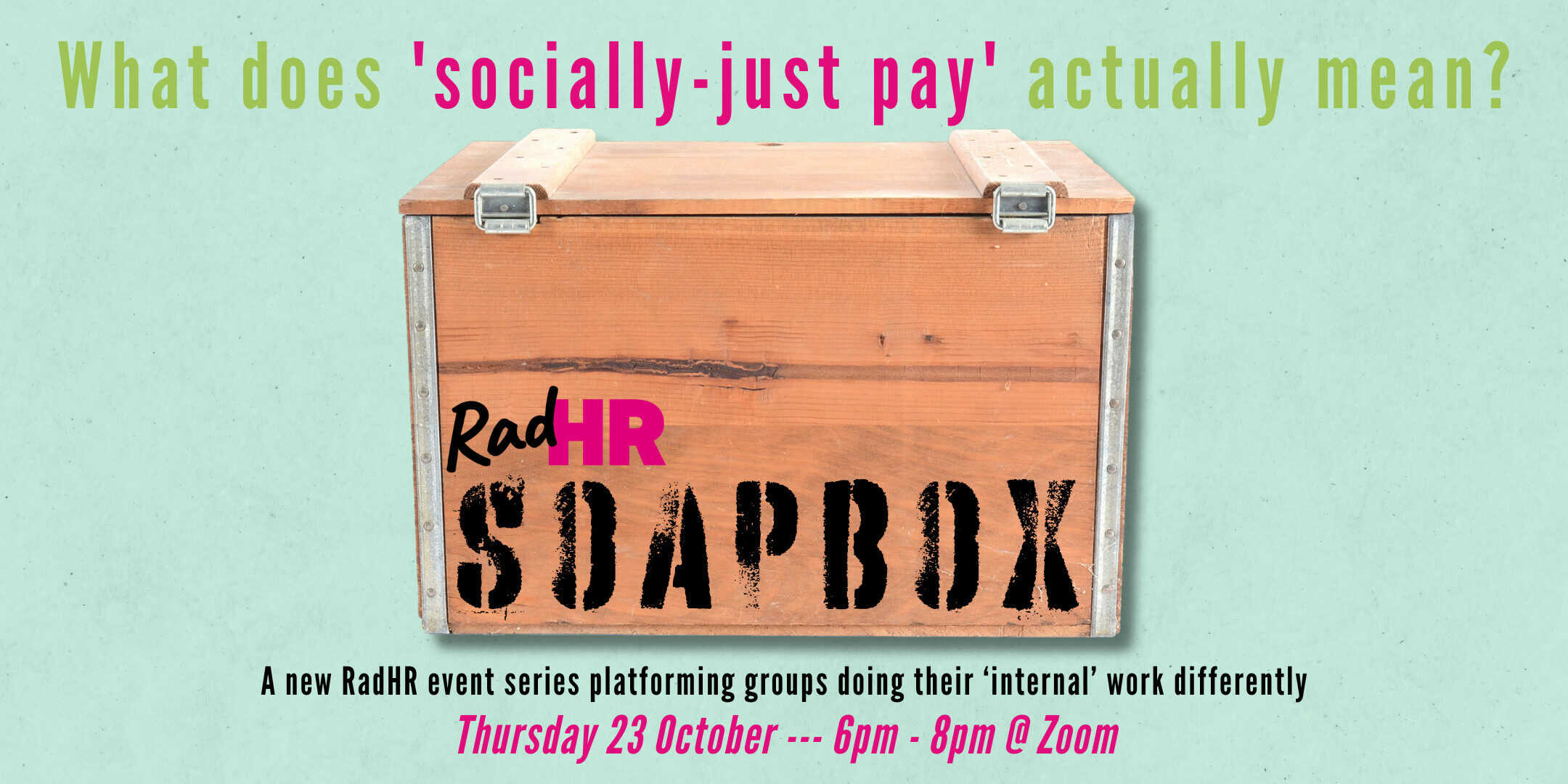
Our next Lunch Meet is Thursday January 29th 1-2pm sign-up now.


A community sharing radical, anti-oppressive ways of working.
An open, collaborative library of radical HR & operations policies.
Advice on how to create radical alternatives to standard policies.
Find out about opportunities to explore radical HR together.
Stories and learning from the frontline of radical internal policy work.
RadHR is a space where groups and organisations invested in building a fairer and more equitable society can come together to share the nuts and bolts—the policies, processes, practices and stories—of how we organise ourselves based on our values.
We are a free, open, and collaborative resource built by people like you: community groups, mutual aid organisations, cooperatives, activist groups and voluntary sector organisations interested in finding ways of working together that help us look after each other and challenge the power structures we find in the wider world.

567 people sharing questions and insights from their own policy-making journeys…

87 policies uploaded by groups like yours, including…

Policy
Keeping young people safe from abuse
This is a youth work cooperative safeguarding policy, accessible for a range of members, which avoids resorting to calling state authorities, unless the group’s safeguarding contacts are not available. Designed by an organisation with a mix of paid and voluntary youth workers, some of whom are adults and some are young people, too. Safety is supported via collective dialogue between youth workers.
Policy
Decision-making policy & process
This policy includes: how decisions are made in a small team, the principles that underpin them, which decisions can be made by whom, and what steps will be taken to support more equitable involvement in decisions. It is based on consensus and mandate decision-making mechanisms.
12 guides to help you develop your own policies and processes…

Guide
Supervision
How to create a collaborative system for keeping track of how work is going
How can we create systems of accountability without hierarchy? This guide considers options for processes that assess how we are each managing in our roles and take into account wider factors when considering why work may not be being done.

Guide
Grievance
How to create non-punitive grievance procedures which deepen our understanding of each other
What does it mean to raise a grievance? This guide covers ways to create grievance procedures that hear different perspectives while avoiding shame and blame, so that we can strengthen rather than corrode the bonds between us.


Guide
Sickness
How to write a compassionate, supportive, solidarity-based sickness policy
What happens if someone goes on long-term sickness absence or is frequently absent? This guide shares practical suggestions to help you develop a compassionate and supportive sickness policy guided by disability justice thinking.

Guide
Power
Living systems for thriving groups: supporting you to organise collaboratively
Navigate is a team of experienced facilitators and trainers. This resource is an online course they’ve developed to help groups thrive by creating and maintaining living social systems that work for them and fit their values.

21 stories from the community, plus tools and updates from the core team…